 24x7 Helpline 080 4019 4444

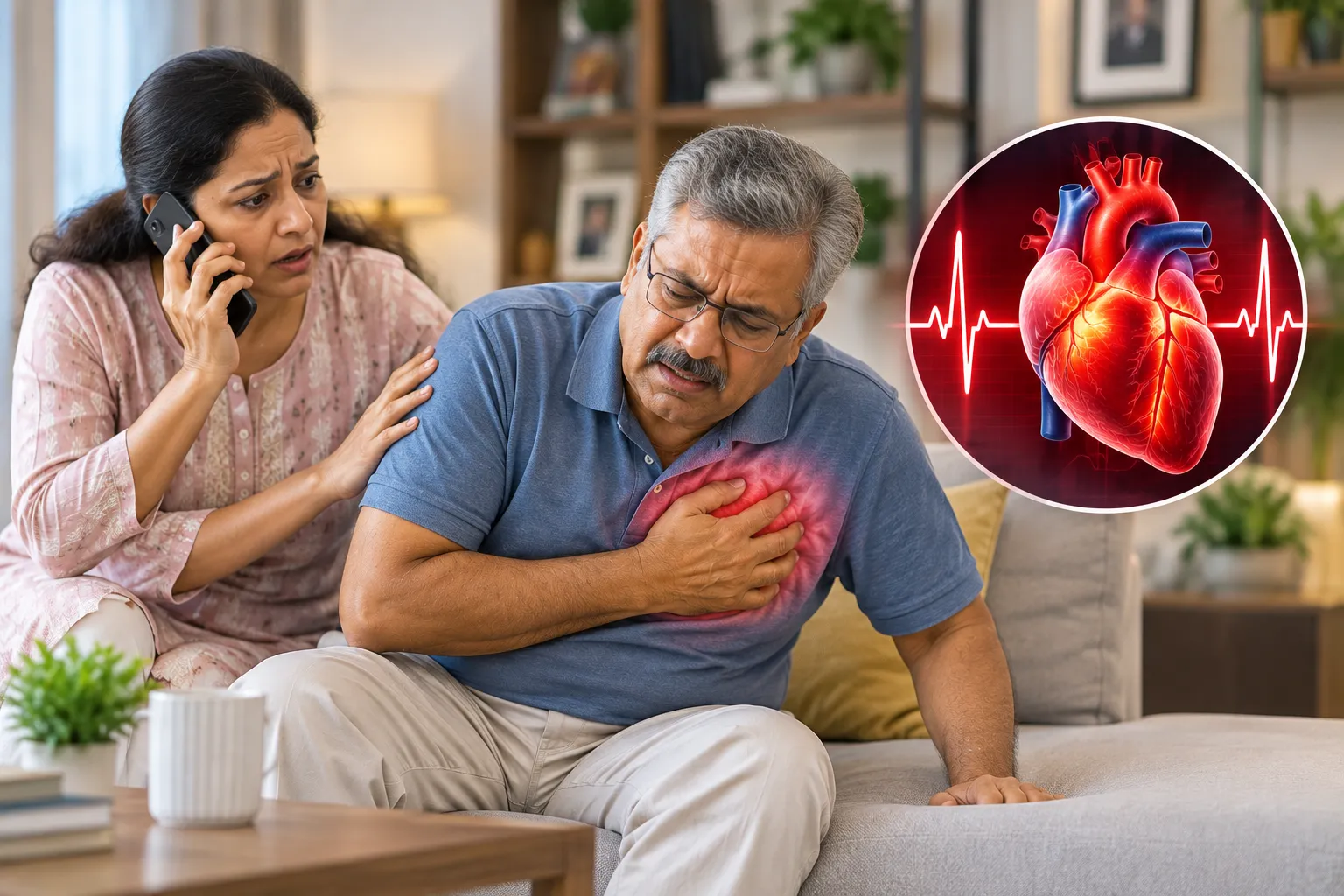
The 7 warning signs of a heart attack include chest pain or pressure, pain spreading to the arms or jaw, shortness of breath, cold sweating, nausea, unusual tiredness, and dizziness. These symptoms can start suddenly or develop slowly. Recognising them early and getting emergency medical help can save your life.
What Is a Heart Attack?
A heart attack happens when blood flow to part of the heart becomes blocked, usually because of a blood clot in a coronary artery. Without enough oxygen, the heart muscle begins to get damaged.
Heart attack symptoms are not always severe or obvious. Some people experience intense chest pain, while others notice mild discomfort, breathlessness, or unusual fatigue.
Knowing the early warning signs of a heart attack can help you recognise an emergency and act quickly.
What Are the 7 Warning Signs of a Heart Attack?
Here are seven important symptoms you should never ignore.
| Warning sign | What it may feel like |
|---|---|
| 1. Chest pain or pressure | Tightness, squeezing, heaviness, or discomfort in the chest |
| 2. Pain spreading to other areas | Pain in one or both arms, shoulders, back, neck, or jaw |
| 3. Shortness of breath | Difficulty breathing, even while resting |
| 4. Cold sweating | Sudden, unexplained sweating with clammy skin |
| 5. Nausea or vomiting | Feeling sick, vomiting, or experiencing indigestion-like discomfort |
| 6. Unusual tiredness | Sudden or unexplained weakness and exhaustion |
| 7. Dizziness or lightheadedness | Feeling faint, unsteady, or as though you might pass out |
Not everyone experiences all seven symptoms. A heart attack may occur with only one or two warning signs.
1. Chest Pain or Pressure
Chest discomfort is one of the most common heart attack symptoms in adults. It may feel like pressure, squeezing, fullness, burning, or heaviness in the centre of the chest.
The discomfort may last several minutes or disappear and return. Do not assume it is acidity, gas, or muscle pain without proper medical assessment.
2. Pain Spreading to the Arm, Jaw, Neck, or Back
Heart attack pain can move beyond the chest. You may feel discomfort in one or both arms, your shoulders, jaw, neck, or upper back.
Sometimes, this spreading pain occurs with little chest discomfort. Unexplained pain accompanied by sweating, nausea, or breathlessness needs urgent medical attention.
3. Shortness of Breath
You may struggle to breathe while walking, climbing stairs, or even sitting still. Breathlessness can occur with chest pain or appear before other symptoms.
Sudden, unexplained breathing difficulty should never be ignored, particularly when accompanied by weakness, sweating, or chest discomfort.
4. Cold Sweating
Breaking into a cold sweat without exercise, heat, or another clear reason can be a warning sign. Your skin may feel cool, damp, or clammy.
If sudden sweating occurs alongside chest discomfort, nausea, or dizziness, seek emergency medical care immediately.
5. Nausea, Vomiting, or Indigestion-Like Discomfort
A heart attack can cause nausea, vomiting, or discomfort in the upper abdomen. Some people mistake these symptoms for acidity or indigestion.
Pay attention when these symptoms appear unexpectedly or occur with chest pressure, breathlessness, or cold sweating.
6. Unusual Tiredness or Weakness
Sudden exhaustion or unusual weakness can sometimes signal a heart problem. Some people, particularly women, report unexplained fatigue before or during a heart attack.
Feeling tired alone does not mean you are having a heart attack. However, sudden or unusual fatigue combined with other warning signs needs urgent assessment.
7. Dizziness or Lightheadedness
A heart attack may cause dizziness, lightheadedness, or a feeling that you might faint. This can happen when the heart cannot maintain adequate circulation.
If dizziness occurs with chest pain, breathlessness, sweating, or fainting, treat it as an emergency.
Signs of a Heart Attack in Men and Women
Heart attacks can affect men and women differently, although there is considerable overlap in their symptoms.
| Men may experience | Women may experience |
|---|---|
| Chest pressure or tightness | Chest pressure or discomfort |
| Pain spreading to the arm or jaw | Pain in the back, shoulder, arm, or jaw |
| Shortness of breath | Shortness of breath |
| Cold sweating | Nausea, cold sweating, or unusual fatigue |
| Nausea or dizziness | Dizziness, weakness, or indigestion-like discomfort |
Important: Chest pain is common in both men and women. Women may also experience less obvious symptoms, so the absence of severe chest pain does not rule out a heart attack.
What Should You Do If You Notice Heart Attack Symptoms?
If you suspect a heart attack, do not wait for symptoms to become severe.
- Call 112 in India for emergency assistance and an ambulance.
- Stop physical activity and sit down in a comfortable position.
- Do not drive yourself to the hospital. Wait for emergency medical assistance.
- Follow the emergency operator’s instructions. Ask about aspirin only if appropriate, especially if you have allergies, bleeding risks, or other medical restrictions.
- If the person becomes unresponsive and is not breathing normally, begin CPR and use an AED if available, following emergency guidance.
Quick treatment can limit heart muscle damage and improve the chances of recovery. Do not delay seeking help to search for symptoms online or arrange a routine appointment.
How Suguna Hospital Can Help
Recognising heart attack symptoms early is important, but getting timely medical attention is equally essential. Suguna Hospital in Rajaji Nagar, Bangalore, can be a point of contact for people seeking medical evaluation for heart-related concerns.
If you experience possible heart attack symptoms, seek emergency care immediately rather than waiting for a routine consultation. Medical professionals can assess your symptoms and determine the appropriate investigations and treatment.
Conclusion: Take Heart Attack Warning Signs Seriously
Recognising the 7 warning signs of a heart attack can help you make an important decision when every minute matters. Never ignore unusual chest discomfort, sudden breathlessness, cold sweating, or unexplained weakness.
If you or someone nearby experiences possible heart attack symptoms, seek emergency medical assistance immediately. For non-emergency heart health concerns, consult the medical team at Suguna Hospital, Rajaji Nagar, Bangalore, for guidance on heart health and appropriate evaluation.
Need medical advice for your heart health? Contact Suguna Hospital to enquire about cardiology consultations and available diagnostic services.
Frequently Asked Questions
1. What is the first warning sign of a heart attack?
Chest pain, pressure, or tightness is a common warning sign. However, some people first experience breathlessness, nausea, sweating, or unusual fatigue.
2. Can a heart attack happen without chest pain?
Yes. Some people experience breathlessness, nausea, sweating, jaw or back pain, or unusual weakness without noticeable chest pain.
3. What are the early warning signs of a heart attack?
Possible early signs include chest discomfort, unusual tiredness, breathlessness, and discomfort in the arms, back, neck, or jaw. Symptoms vary from person to person.
4. How long do heart attack symptoms last?
Symptoms may last several minutes, disappear and return, or develop gradually. Never wait for symptoms to last a certain amount of time before seeking emergency help.
5. Are heart attack symptoms different in men and women?
There is considerable overlap. Chest discomfort is common in both, while women may also experience nausea, unusual fatigue, back pain, or breathlessness.
6. Can acidity feel like a heart attack?
Yes. Heart attack discomfort can resemble acidity or indigestion. If symptoms are new, unexplained, or accompanied by sweating or breathlessness, seek emergency medical assessment.
7. When should I go to a hospital for chest pain in Bangalore?
Seek emergency help for new or unexplained chest pain, particularly when accompanied by breathlessness, sweating, nausea, or pain spreading to other areas. Call 112 rather than driving yourself.