 24x7 Helpline 080 4019 4444

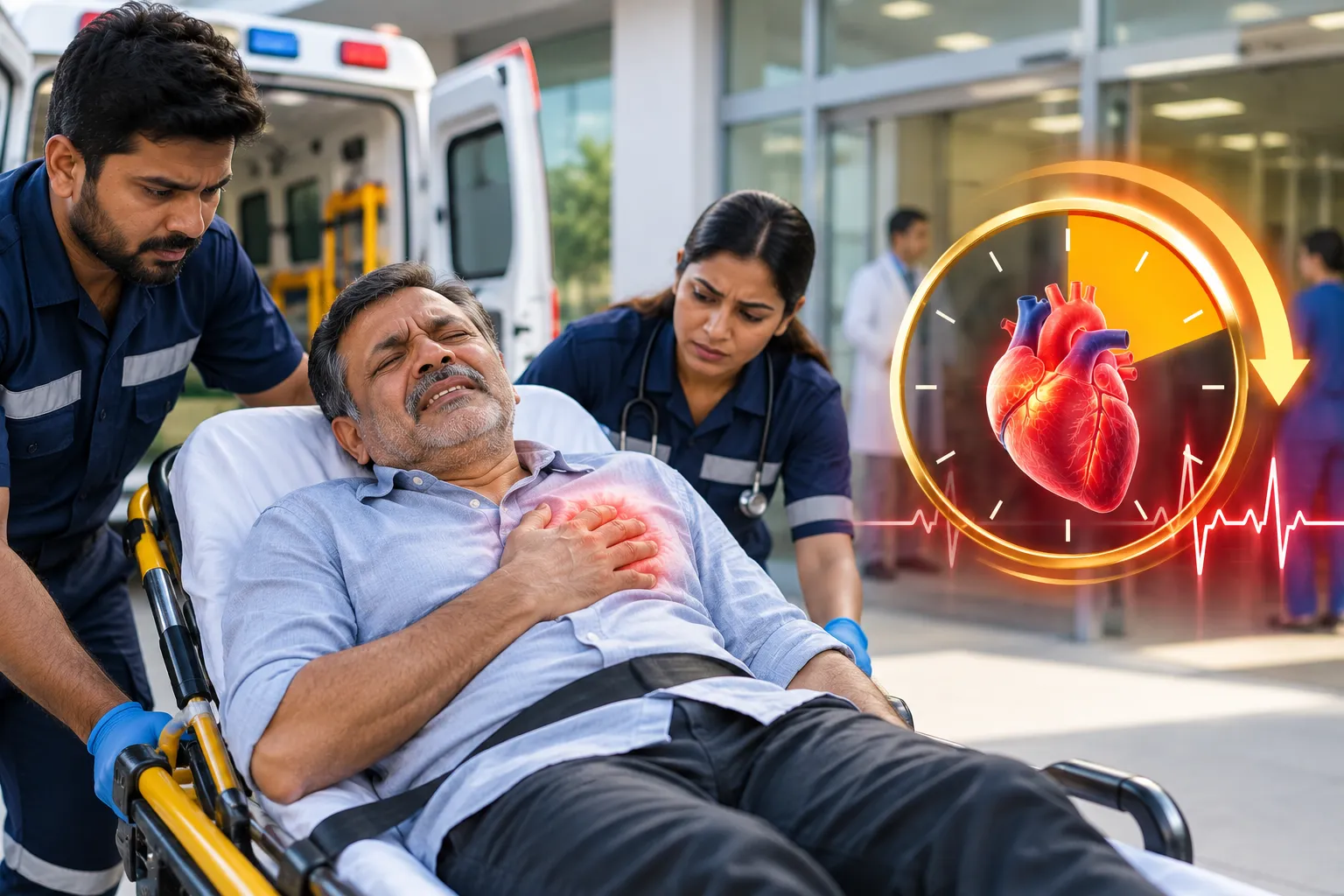
The golden hour in a heart attack refers to the early period after symptoms begin when quick medical treatment can help reduce damage to the heart. Getting emergency care as soon as possible is important because the longer the heart goes without enough blood and oxygen, the more damage it may suffer.
What Is the Golden Hour in a Heart Attack?
A heart attack happens when blood flow to part of the heart becomes blocked. Without enough oxygen, the heart muscle starts getting damaged.
The term golden hour in a heart attack highlights why early treatment matters. Getting medical help quickly gives doctors a better chance to restore blood flow and reduce damage.
However, the first hour is not a strict deadline. Treatment can still help even if more time has passed. If you think someone is having a heart attack, get emergency medical help immediately.
Why Is the Golden Hour Important?
During a heart attack, every minute matters. Delaying treatment can lead to more damage and serious health problems.
Here is why early treatment is important:
| Benefit | Why it matters |
|---|---|
| Less heart damage | Quick treatment may help protect the heart muscle. |
| Fewer complications | Early care helps doctors manage problems such as abnormal heart rhythms. |
| Better recovery | Treating the blockage quickly may help preserve heart function. |
| Faster diagnosis | Doctors can use an ECG and blood tests to check for a heart attack. |
The importance of early treatment for a heart attack is simple: the sooner a person receives medical care, the better the chance of limiting heart damage.
What Are the Warning Signs of a Heart Attack?
Heart attack symptoms are not always the same for everyone. Some people experience severe chest pain, while others have mild discomfort or symptoms that develop slowly.
Look out for these warning signs:
- Chest pain or pressure: The chest may feel tight, heavy or uncomfortable.
- Pain in other areas: Pain may spread to the arms, back, neck or jaw.
- Breathing problems: The person may feel short of breath.
- Cold sweating: Sudden sweating without an obvious reason can be a warning sign.
- Nausea: Some people feel sick or experience vomiting.
- Dizziness or unusual tiredness: A person may feel weak, lightheaded or suddenly exhausted.
Women, older adults, and people with diabetes may have less typical symptoms. A heart attack can also happen without obvious chest pain.
If you notice these symptoms, do not wait for them to become severe. Seek emergency medical help.
How Is a Heart Attack Treated?
When a patient reaches the hospital, doctors check their symptoms and carry out tests to understand what is happening.
| Test or treatment | Why it is needed |
| ECG | Checks the heart’s electrical activity. |
| Blood tests | Help detect damage to the heart muscle. |
| Medicines | May help manage the heart attack and reduce complications. |
| Angioplasty | May be used to open a blocked artery and restore blood flow. |
| Heart monitoring | Helps doctors watch for changes and complications. |
Treatment depends on the type of heart attack and the patient’s condition. Doctors decide which approach is most suitable.
Why Is Quick Heart Attack Treatment Important in Bangalore?
Bangalore traffic can make it difficult to reach a hospital quickly, especially during busy hours. But possible heart attack symptoms should never be ignored because of traffic or uncertainty about where to go.
If you are in Rajaji Nagar or another part of Bangalore, call emergency services as soon as you suspect a heart attack. Choose an appropriate emergency facility based on your location and the care available.
Searching online for heart attack treatment in Bangalore can help you learn about local hospitals, but do not delay emergency treatment to compare options.
How Suguna Hospital Supports Heart Emergency Care
Suguna Hospital in Rajaji Nagar, Bangalore, provides accident and emergency services, cardiac sciences and critical care.
Its emergency services include facilities for initial assessment, cardiac monitoring and emergency stabilisation. The medical team can assess the patient’s condition and determine the next steps based on their needs and the services available.
For suspected heart attack symptoms, seek emergency medical help immediately.
Suguna Hospital contact numbers:
- Hospital: 080 40194444 / 080 23327777
- Ambulance: 6364594533
Call to confirm the appropriate emergency arrangements. Do not delay treatment while trying to contact the hospital.
Key Takeaway
A heart attack can happen without warning, and waiting too long to get help can increase the risk of serious damage. Recognising the symptoms and acting quickly can make a real difference.
If you or someone near you may be having a heart attack, seek emergency medical help immediately. Do not wait for the golden hour to pass.
Need emergency heart care in Rajaji Nagar, Bangalore? Suguna Hospital provides accident and emergency services to assess and manage urgent medical conditions. Contact the hospital for emergency assistance or call 112 for emergency services. Quick action can help save a life.
Frequently Asked Questions
1. What is the golden hour in a heart attack?
It refers to the early period after symptoms begin when quick treatment can help limit damage to the heart.
2. Can a heart attack be treated after one hour?
Yes. Treatment can still save lives after the first hour. Never delay seeking help because you think it is too late.
3. What are the first signs of a heart attack?
Common signs include chest pressure, shortness of breath, sweating, nausea and pain in the arm, back or jaw.
4. Can a heart attack happen without chest pain?
Yes. Some people experience breathlessness, nausea, dizziness or unusual tiredness without clear chest pain.
5. Should I wait for heart attack symptoms to go away?
No. If you suspect a heart attack, seek emergency medical help immediately, even if symptoms are mild or come and go.
6. Where can I get heart attack emergency care in Rajaji Nagar?
Suguna Hospital lists accident and emergency services in Rajaji Nagar, Bangalore. Call emergency services immediately if you suspect a heart attack.